Lionel Brooks
Children’s Encyclopedia of Dinosaurs_Spinosaurus
Impossible de charger la disponibilité du service de retrait
Give Your Child the Gift of Learning with This Amazing Spinosaurus Adventure Ebook!
Introducing Children’s Encyclopedia of Dinosaurs – Spinosaurus — a dramatic educational ebook that takes kids back to the Cretaceous period to meet Spinosaurus, a giant, sail-backed predator that may have spent much of its life in and around water. This ebook is perfect to spark curiosity, build science vocabulary, and help children understand how one dinosaur could combine huge size, sharp teeth, and semi-aquatic habits to become a true “giant spiny lizard” of ancient rivers and swamps.
This exclusive ebook includes:
✅ Main Ebook: Children’s Encyclopedia of Dinosaurs_Spinosaurus
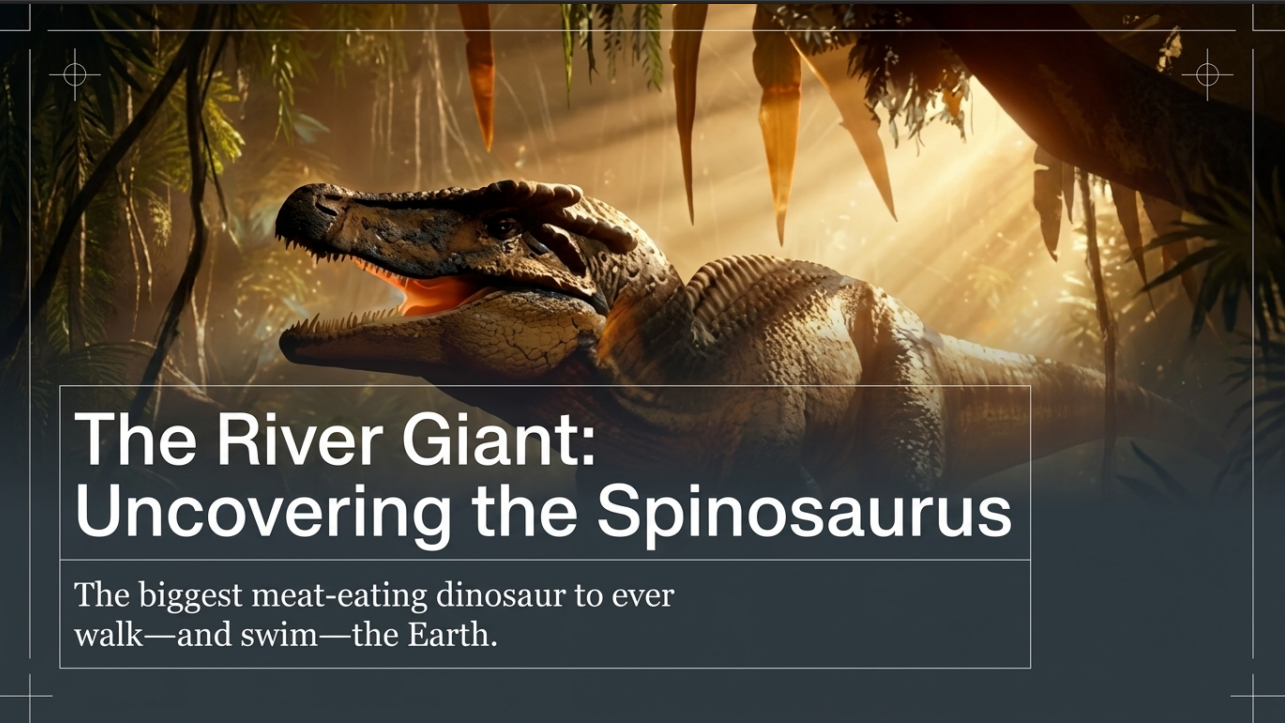
A kid-friendly encyclopedia entry that explains what makes Spinosaurus special: it was a very large theropod (meat-eating) dinosaur with a long, crocodile-like snout, straight conical teeth for catching slippery prey, relatively short back legs, and tall spines rising from its back that formed a sail of skin. Children discover that Spinosaurus lived about 95–100 million years ago during the Cretaceous period, in what is now North Africa, where broad river systems, wetlands, and coastal lagoons supported many fish and other animals. The ebook introduces simple ideas such as “carnivore,” “theropod,” and “semi-aquatic,” and shows how Spinosaurus may have reached more than 14–18 meters (around 45–59 feet) in length, making it one of the biggest, and possibly the longest, meat-eating dinosaurs ever known. It also explains that many scientists think Spinosaurus hunted mainly fish, wading and swimming through rivers and swamps like a huge, dinosaur-sized crocodile, and that new fossils suggest it had dense bones and a broad tail to help it move in water.
Children learn that the name “Spinosaurus” means “spined lizard” and that its tall sail, made of long backbone spines joined by skin, might have helped with display, body temperature control, or storing fat, although scientists are still debating its exact purpose. The ebook describes how Spinosaurus shared its world with other large predators but may have occupied a special niche by spending more time in water, and how changing ideas and new fossil discoveries show children how science can update earlier pictures of dinosaurs as we learn more.
✅ Poster Infographic: Spinosaurus__The_Giant_Spiny_Lizard
A colorful infographic page that visually presents the most important facts about Spinosaurus: length, estimated weight, sail height, skull shape, habitat, and diet. The infographic uses diagrams and short captions to help children quickly remember that Spinosaurus had a long, narrow snout with many straight teeth, a sail rising high above its back, and a body adapted to life near rivers and swamps. It highlights fun facts such as how its sail may have reached several metres tall, how scientists compare its skull to that of crocodiles to explain its fish-eating lifestyle, and how Spinosaurus may have been longer than famous predators like Tyrannosaurus rex. This turns complex information into a simple, memorable visual guide that kids can revisit whenever they want a quick “giant spiny lizard at a glance” reference.
✅ Parent Presentation: Spinosaurus_Revealed
A structured parent presentation designed for families, teachers, and curious young learners that works like a mini guide to Spinosaurus and the way science reveals new details about this unusual dinosaur. It organizes key information on anatomy, sail, fossils, habitat, and changing scientific ideas into clear sections that make discussion, note-taking, projects, and school reports easier. The presentation can include a simple timeline showing when Spinosaurus lived, a map of where its bones have been found in North Africa, comparison boxes that contrast Spinosaurus with other large theropods and modern crocodiles, and question prompts that encourage children to think about how scientists use bones, teeth, and computer models to ask “How big was it?”, “Could it swim?”, and “What did it eat?”. This helps adults and learners connect the main ebook to broader themes about scientific discovery, how evidence changes our view of dinosaurs, and how one extraordinary animal could become a symbol of semi-aquatic life among giant carnivores.
Why this ebook is perfect for your child:
-
Designed for children ages 4–10, with clear explanations and striking visuals of Spinosaurus standing in rivers, showing off its sail, and hunting fish and other prey.
-
Combines narrative reading, infographic learning, and parent-friendly presentation material for maximum impact in classwork, homework, or home learning.
-
Encourages curiosity about giant predators, Cretaceous rivers and swamps, food chains, and how scientists study fossils to learn about life in water and on land.
-
Helps children build awareness about theropods, semi-aquatic dinosaurs, and the way Earth’s past included creatures that were both powerful swimmers and fearsome hunters.
By choosing Children’s Encyclopedia of Dinosaurs – Spinosaurus, you give your child an exciting learning experience that connects storytelling, real dinosaur science, and Earth history, turning every page into a “giant spiny lizard” adventure in the world of prehistoric rivers and swamps.
“I believe books have the power to enrich your knowledge, ignite your curiosity, and motivate you to learn more.” — Lionel Brooks
Perfect for children ages 4–10. Great for school projects, dinosaur reports, or weekend reading for young fans of giant carnivores!
Get your Spinosaurus ebook today — instant download included!